Mihir S Sharma on the false opposition being created between 'governance' and 'vote bank politics'.

The judge, during arguments, said it was "blindingly obvious" that "rules were broken by the bank" and that they had "gone against their own guidelines" in extending a loan to the business tycoon's now defunct Kingfisher Airlines.

The venture is seen as a rival to the World Bank.
Not only has the Mudra loan mela generated no jobs, it has frittered away trillions of taxpayers' money and it's time to bury the scheme, argues Debashis Basu.

The only real solution to the jobs crisis, whether in India or abroad, is to direct tech innovation towards job enhancing sectors, and disincentivising job-replacing ones, observes R Jagannathan.

'We will win all the 28 Lok Sabha seats in 2024.'

If the interest rate on bank deposits is linked to any external benchmark, it would jeopardise the banks' fund-raising ability. Interest rates on small savings schemes are likely to be reduced very shortly, to maintain parity. All these steps would indeed affect retired people, and particularly those dependent on interest income, says Arindam Gupta.

The infra-major going belly up cracked open some major flaws in the system - the most evident being weak corporate governance and how layers of corporate structures could be formed adding to the opaqueness of the group.

You can make all the speeches you want, you cannot argue against 39 straight months of slowing, observes Aakar Patel.
High rates of such schemes deter banks from dropping borrowing rates - and thus lending rates

The hoarding of cash accentuated from the very start of 2020, when the coronavirus pandemic started taking hold the world over, and fear of the pandemic prodded people to remain liquid for emergency use.
Claims to have the lowest base rate in the market.
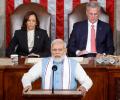
Here's the full text of Prime Minister Narendra Modi's address to a joint session of the United States Congress, delivered on Thursday.

Good intentions are best left to political parties, governments and religious establishments, suggests T C A Srinivasa-Raghavan.

'By design or default, the BJP's election strategy militated against the very essence of Karnataka politics and the idea of Karnataka.'
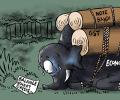
'The current budgetary practice of shifting expenditures off-balance sheet in order to be seen to be meeting fiscal targets should be discontinued; additional fiscal stimulus would be imprudent; individual income tax rates should not be cut; GST rates should not be raised now,' advise Arvind Subramanian and Josh Felman.
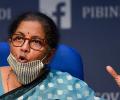
The central bank is the money manager of the government, and not a guarantor of any debt.

Bank licencing has been a "once in a decade" affair and so it could well be that we don't face this process anytime soon.
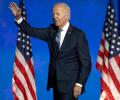
'The hardliners in Delhi are in for a big disappointment,' predicts Ambassador M K Bhadrakumar.

'India has a conviction rate of about 25% for serious crimes. This means that 75% of the time the police probably get the wrong suspect, and this makes murdering them in an encounter more morally problematic for the officers concerned.' says Aakar Patel.

'The top 10 industries encompass 84% of the total new payrolls, indicating that industry is coming on steam after the initial hiccups following GST,' say Soumya Kanti Ghosh and Pulak Ghosh.

Privatising public sector companies would have encountered significant opposition from their managers as well as from strong unions.
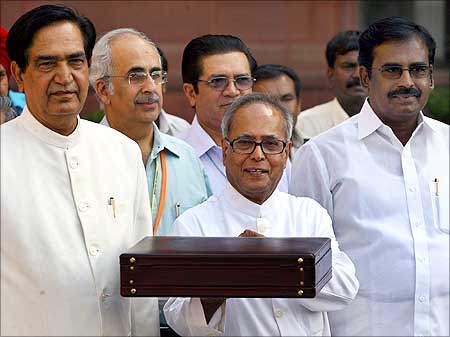
The sad truth is that the debt-to-GDP ratio will shoot up close to 90 per cent in the coming year, and the fiscal deficit glide path does not promise to reduce it substantially any time soon, predicts Mihir S Sharma.

For India, struggling for competitiveness, the current rupee overvaluation in terms of real effective exchange rate is a genuine constraint.

The Indian economy has recovered 'handsomely' from the pandemic-induced disruptions, former Niti Aayog vice chairman Arvind Panagariya said on Tuesday, while expressing hope that the recovery will be sustained and the growth rate of 7 to 8 per cent will be restored. Panagariya suggested that the government must now signal its intention to wind down fiscal deficit by cutting it by half-to-one percentage point in 2022-23. "The Indian economy has recovered handsomely, returning to its pre-COVID GDP... "Only private consumption is still below its pre-COVID-19 level," the eminent economist told PTI in an interview.

Kenneth Rogoff, professor of public policy and economics at the Harvard University, tells Dilasha Seth on the sidelines of the Delhi Economics Conclave that public sector banks will need to take a one-time haircut to address non-performing assets.

If indeed the issues involved between the government and RBI are of immense public interest, why not make public the arguments of both the government and the RBI, irrespective of the outcome of the process, says Tamal Bandyopadhyay.However, the Act is silent on what happens if the governor's views differ from that of the government. If Patel does not want to budge from his stance the government can either see merit in the Governor's arguments and decide against going ahead with its plan or overrule him. My guess is that the issues raised by the government need to be sorted out not at the November 19 board meeting but between the Governor and the government, says Tamal Bandyopadhyay.

The brand new bankruptcy process is being brazenly gamed by those with connections and money. The touts and fixers of the previous regime have been replaced by a new set close to this one, observes Debashis Basu.

There is indeed a Bengal Model but it is one which negates generational aspiration, generates animus, thrives on bloodletting and political vendetta, reiterates outdated ideas of vote bank politics, is shorn of any vision or roadmap for reconstruction and is fast depleting the levels of a legitimate tolerance, says Dr Anirban Ganguly.
"We see the Indian economy rebounding from our projected 6.1 per cent growth this fiscal year to something like 7 per cent in the next fiscal year (2020). We see the factors that will support growth, including monetary policy stimulus, working their way through the pipeline," Jonathan Ostry, Deputy Director, Asia Pacific Department at the IMF, told reporters.

To help the country emerge as a true welfare State, political parties must put the country's interests first before strategising to win elections and short-term goals, argues Ramesh Menon.

We need to make start-ups, instead of small businesses, part of the priority sector, says Shubhashis Gangopadhyay.

'The digital economy will generate 60 to 65 million jobs by 2025, 20 million more than the 40 to 45 million existing jobs that are in danger of disappearing or getting automated,' points out T N Ninan.

People like Manmohan Singh and P Chidambaram, who as finance minister had fully supported the NPS, refuse to exercise their moral and political influence to try and stop Ashok Gehlot and others hell-bent on wrecking the states' finances, notes Virendra Kapoor.

'India-China economic ties are likely to take a hit in the wake of the new situation, but that also provides India with a new opportunity to strengthen its manufacturing base,' points out Dr Rajaram Panda.

The US intends first to cripple the Afghan government financially through sanctions, freezing of assets, denial of access to international banking, etc, and then proceed to do pretty much what it wants to do with scant regard for Afghanistan's sovereignty, predicts Ambassador M K Bhadrakumar.

'As CIC, you have the power to comment on policy matters. 'If you have very strong beliefs and you know your rulings will be reported, you will express your beliefs.'
Billionaire Mukesh Ambani on Friday backed the proposed data privacy and cryptocurrency bills, saying India is putting in place the most forward-looking policies and regulations. Ambani, who has been a votary of Indians owning and controlling their own data and the nation drafting strict rules around how digital information is stored and shared, said nations have the right to build and protect strategic digital infrastructure. Stating that data is the 'new oil', he said every citizen's right to privacy has to be safeguarded. "India is putting in place the most forward-looking policies and regulations," he said at the Infinity Forum, hosted by International Financial Services Centres Authority (IFSCA).

Inflation targeting has worked well and the government must stay with it, and the framework is going to work well in the period ahead also, former RBI Governor D Subbarao said on Thursday. He also said low inflation contributes to sustainable growth. Addressing the 'Times Network India Economic Conclave' virtually, Subbarao said the government's proposal to privatise some public sector units is not akin to selling family silver but it is a route for putting India on a sustainable growth path.

The government's programmes should be expected to generate some momentum, but the macro-economic numbers are not encouraging, observes T N Ninan.
